Water Resource Management
Implementing Water-Saving Actions and Practicing Sustainability in Everyday Details
Water use on campus not only affects the daily lives of faculty, staff, and students but also supports teaching and research activities. Therefore, all campuses actively implement water conservation and management measures. The University primarily relies on municipal water supplies, supplemented by rainwater harvesting systems to enhance the stability and resilience of water resources. Water is used for a variety of purposes, including domestic consumption, teaching and laboratory activities, cleaning, and landscape irrigation. Among these, toilet flushing and cleaning account for the largest proportion of water use, while irrigation demand varies seasonally. To support efficient water management, the campuses are equipped with water towers, storage tanks, and various water supply facilities. Water-saving faucets, dual-flush toilets, and sensor-operated fixtures have been progressively installed to reduce unnecessary water consumption. In addition, the University has introduced smart water meters and monitoring systems to track water usage in real time and detect abnormal consumption patterns. Water conservation initiatives also promote the reuse of rainwater and reclaimed water, thereby reducing dependence on municipal water supplies. The University places strong emphasis on water conservation education as well. Through awareness campaigns, signage, academic courses, and outreach activities, faculty, staff, and students are encouraged to develop water-saving habits. Water consumption data are also disclosed to promote transparency and strengthen conservation awareness. Overall, the University’s water resource management strategy continues to evolve toward greater efficiency, reuse, and intelligent management. These efforts not only improve water-use efficiency but also reinforce the University's commitment to sustainability.
Wastewater Reclamation and Reuse at Sewage Treatment Plants
The First Campus and Yanchao Campus have not yet completed connection to the municipal sewage sewer system. Therefore, on-site wastewater treatment plants have been established to treat wastewater generated within the campuses. All treatment processes comply with effluent discharge standards. After treatment, part of the reclaimed water is reused for landscape irrigation or discharged into ecological ponds for reuse, while the remaining treated effluent is discharged in accordance with regulations. In contrast, the other campuses have already been connected to the municipal sewage sewer system.
Ⅰ.Wastewater Treatment and Reuse at the First Campus
The First Campus wastewater treatment consists of one sewage treatment plant in the East Campus, with the main sewage sources being domestic sewage from the teaching area buildings and laboratory washing sewage. After treatment every day, approximately 10 m³ of recycled water is used for green area irrigation, and the rest, approximately 187 m³, is discharged. The annual treatment capacity (in 2025) is approximately 68,373 m³. The secondary sewage treatment facility on the underground floor of Jingye Building in the West Campus mainly treats domestic sewage from student dormitories. The daily sewage inflow is approximately 63 m³, which is treated and injected into the ecological pool for reuse as effluent. The annual treatment capacity is approximately 23,029 m³. The sewage generated by the Lequn Building in the West Campus is treated and discharged, and the annual treatment capacity is approximately 26,475 m³. Accordingly, the total annual treatment volume for the West Campus was approximately 49,504 m³. According to the statistics, the total volume of recycled water for reuse in 2025 was approximately 26,590 m³ (approximately 3,561 m³ in the East Campus and 23,029 m³ in the West Campus).
The First Campus at NKUST is equipped with a rainwater harvesting system. After simple treatment, rainwater collected from the roof is stored in a foundation storage tank integrated with the building's raft foundation. The annual rainwater recovery volume can achieve 10,000 tons, which is widely used for flushing toilets, irrigating green spaces, and suppressing dust. The ecological pool (also known as the Black-winged Stilt Pool) on campus covers approximately 14,000 square meters and has a total water storage capacity of 10,000 tons. By utilizing domestic wastewater and rainwater runoff, the ecological pool serves both as a landscape feature and as flood control purpose.
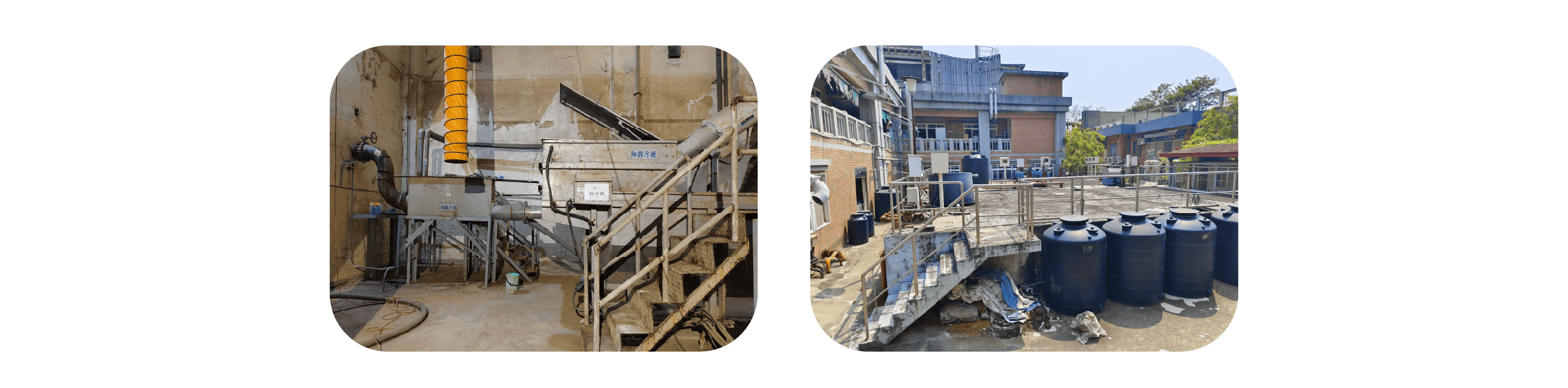
Photo of Sewage treatment plant at the First Campus
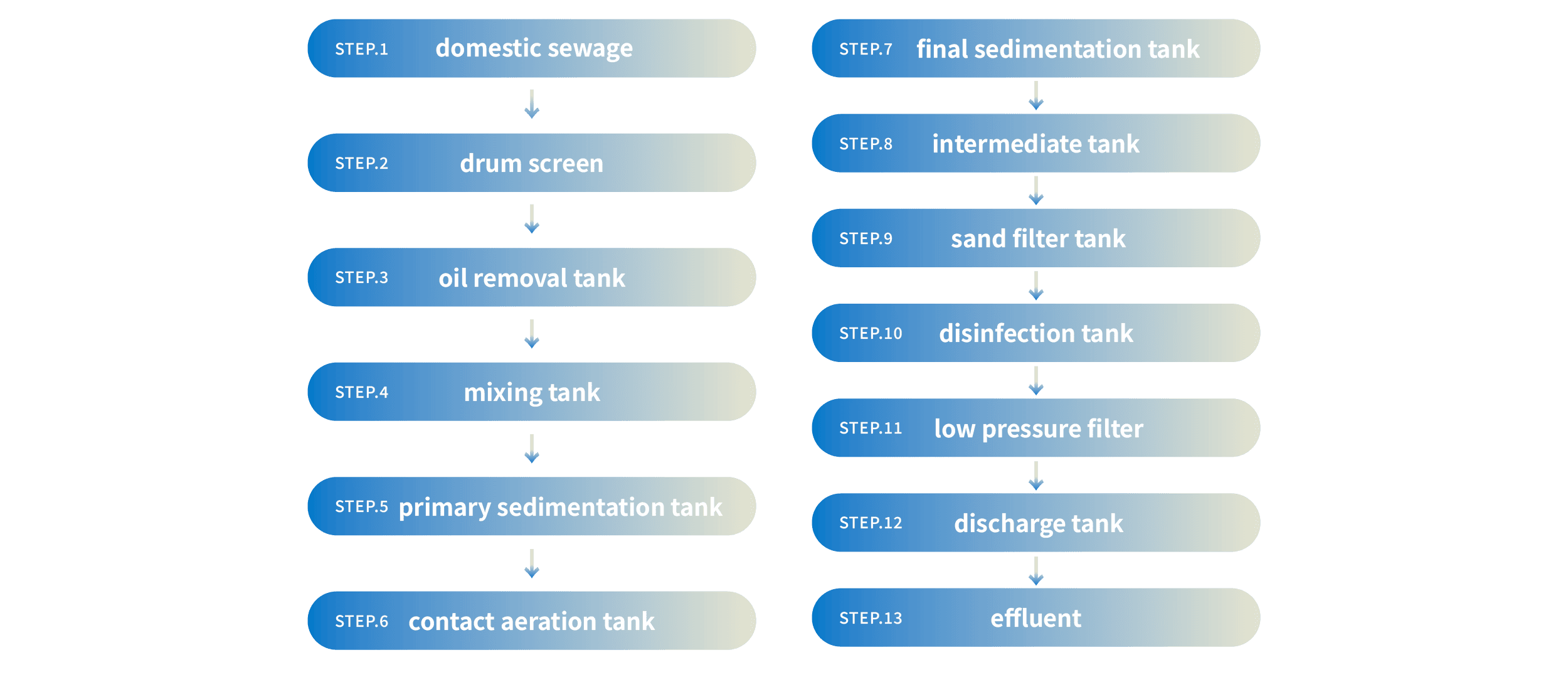
The campus sewage treatment procedure at the First Campus is as follows:
Ⅱ.Yanchao Campus
A sewage treatment plant is established in the Yanchao Campus, with the main sources of sewage being the domestic sewage from each teaching buildings and dormitories. The annual treatment capacity of the sewage treatment plant is approximately 21,204 m³, and the treated sewage is discharged to the tributary of the Dianbao River.
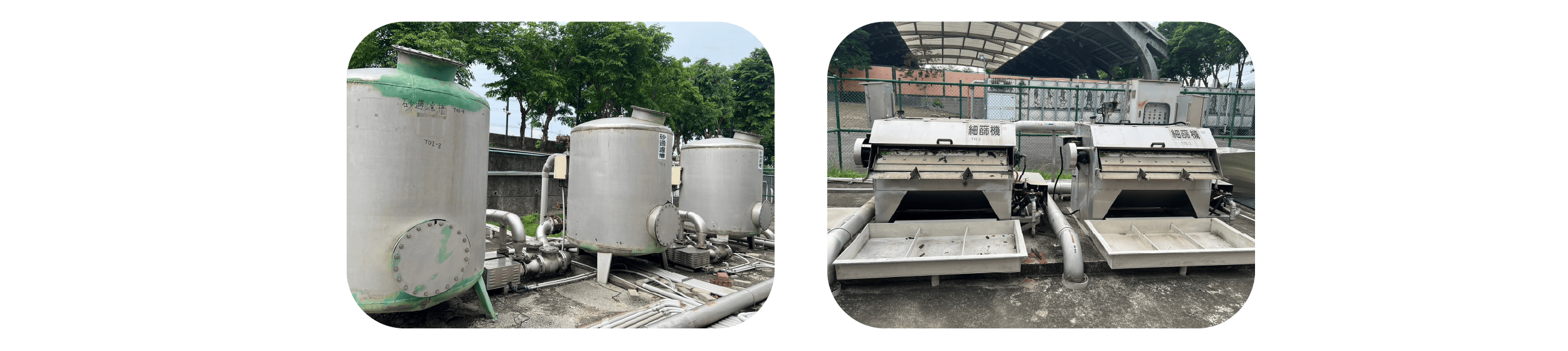 Sewage treatment plant at the Yanchao Campus
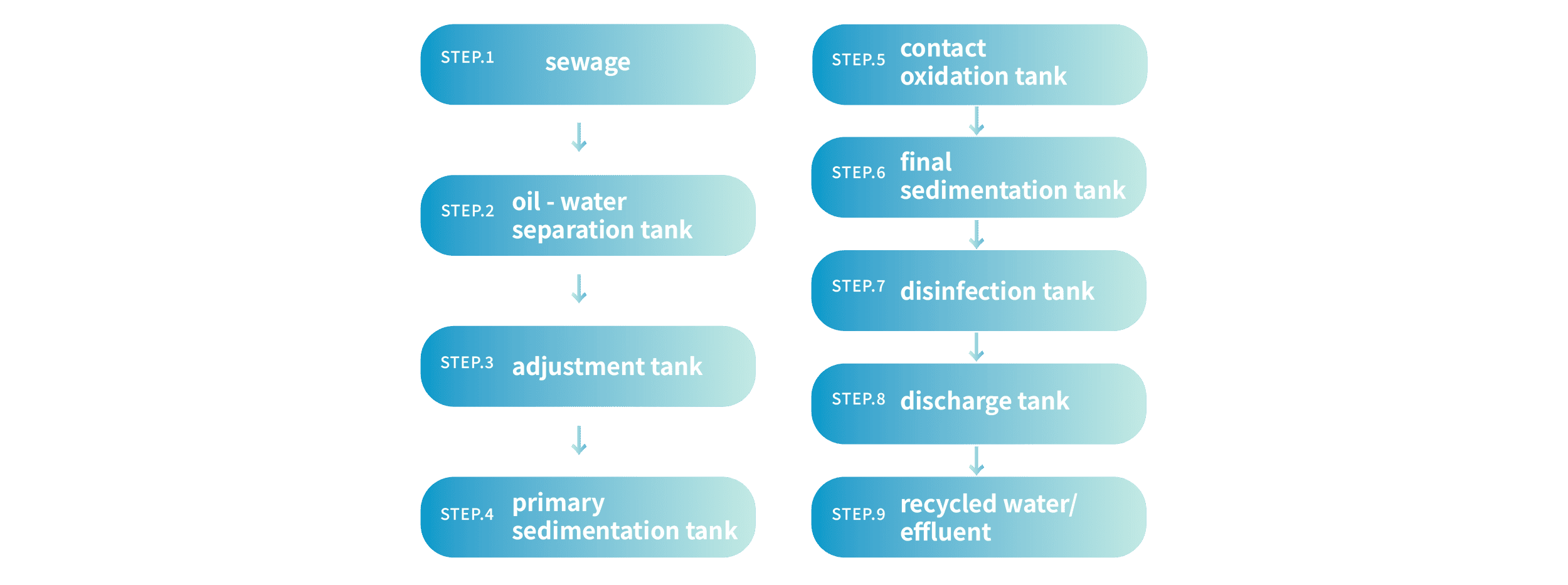
The sewage treatment procedure at the Yanchao Campus is as follows: