Engaged Stakeholders
Since 2023, NKUST's Office of Sustainable Development has been committed to establishing transparent, timely, and multi-channel communication mechanisms with engaged stakeholders1. In accordance with the requirements of the GRI Standards 2021, the Office conducts materiality analyses of sustainability issues and, with reference to the AA1000 Stakeholder Engagement Standard (AA1000SES), collects the expectations of engaged stakeholders through biennial questionnaire surveys. Serve as an important reference for promoting sustainable university governance and evaluating the effectiveness of sustainability initiatives.
Regarding the widely used term "stakeholder," the University's Institutional Research Steering Committee approved a resolution in 2023 (the 112th academic year) to eliminate semantic connotations of hierarchy or power imbalances, thereby emphasizing the spirit of collaboration and shared participation.
Engaged Stakeholders
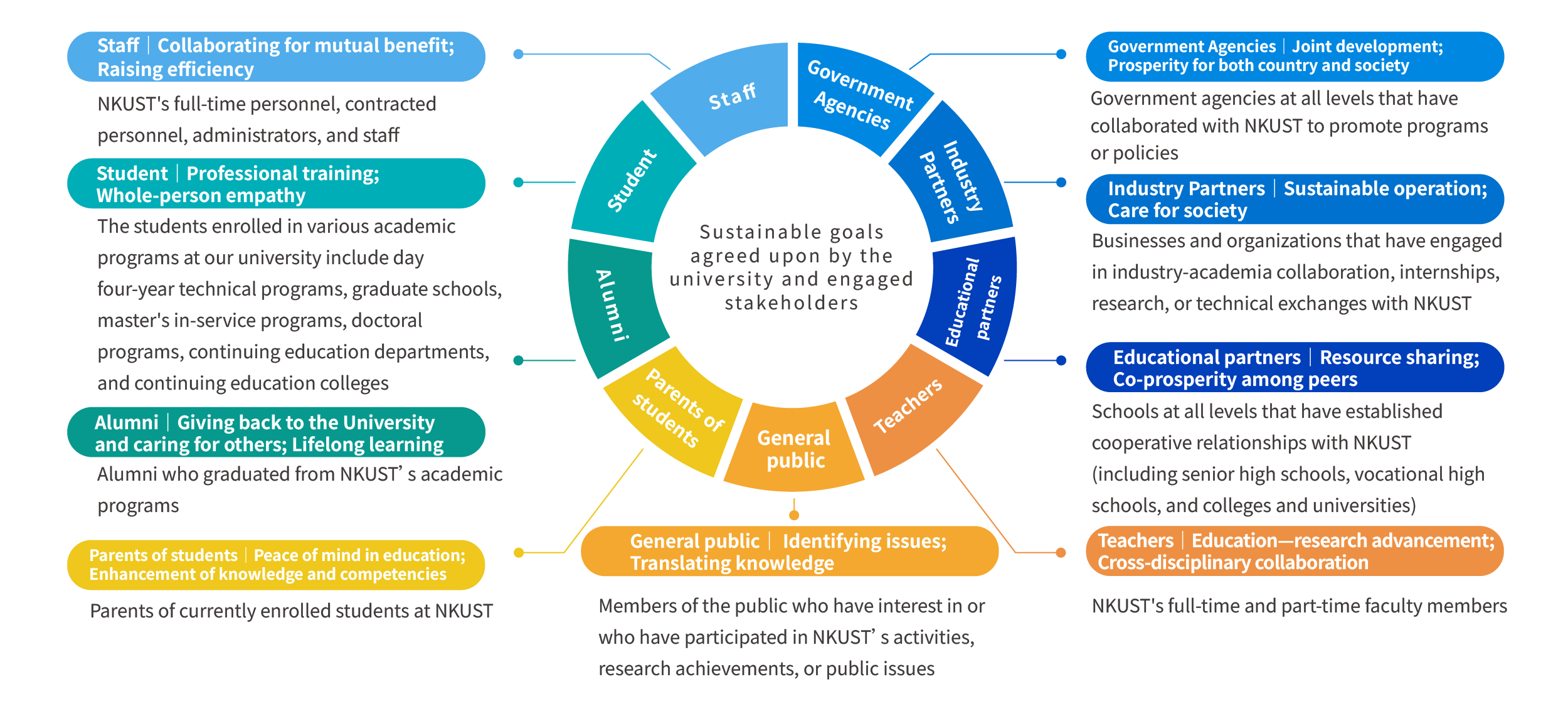
Engaged stakeholders refer to internal or external groups or individuals who have an impact on the operation, teaching and research, environment, and society of our university, or who are affected by our university. Through the consultation process with the Sustainability Report Compilation Committee and the heads of primary administrative units, the relevant engaged stakeholders of our school have been identified and categorized as follows: faculty and staff, students, alumni, parents of students, government agencies, industry partners, educational partners, and the general public.
 Listening to Engaged Stakeholders
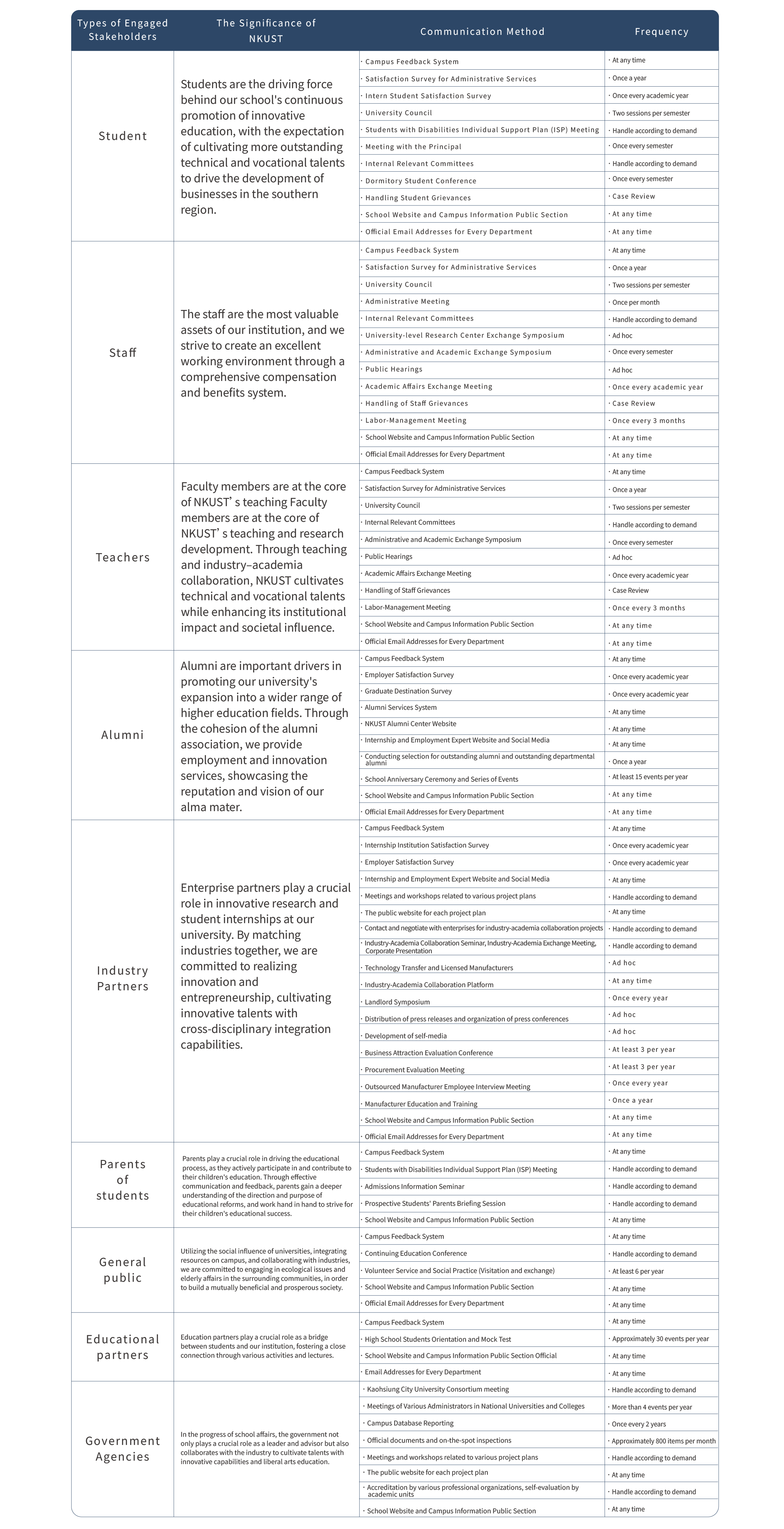
The school is committed to engaging with all engaged stakeholders and strives to understand the various issues that different organizations and individuals care about. Through NKUST's School Information Disclosure Website and sustainability platform, we communicate our policy commitments, and by establishing effective communication channels, the school aims to facilitate two-way communication and feedback, thereby promoting the development of the school and creating a diverse and friendly campus environment. The following is an explanation of the issues, communication methods, and frequency of concern to engaged stakeholders: